
What’s Really Happening Inside Your Roof System
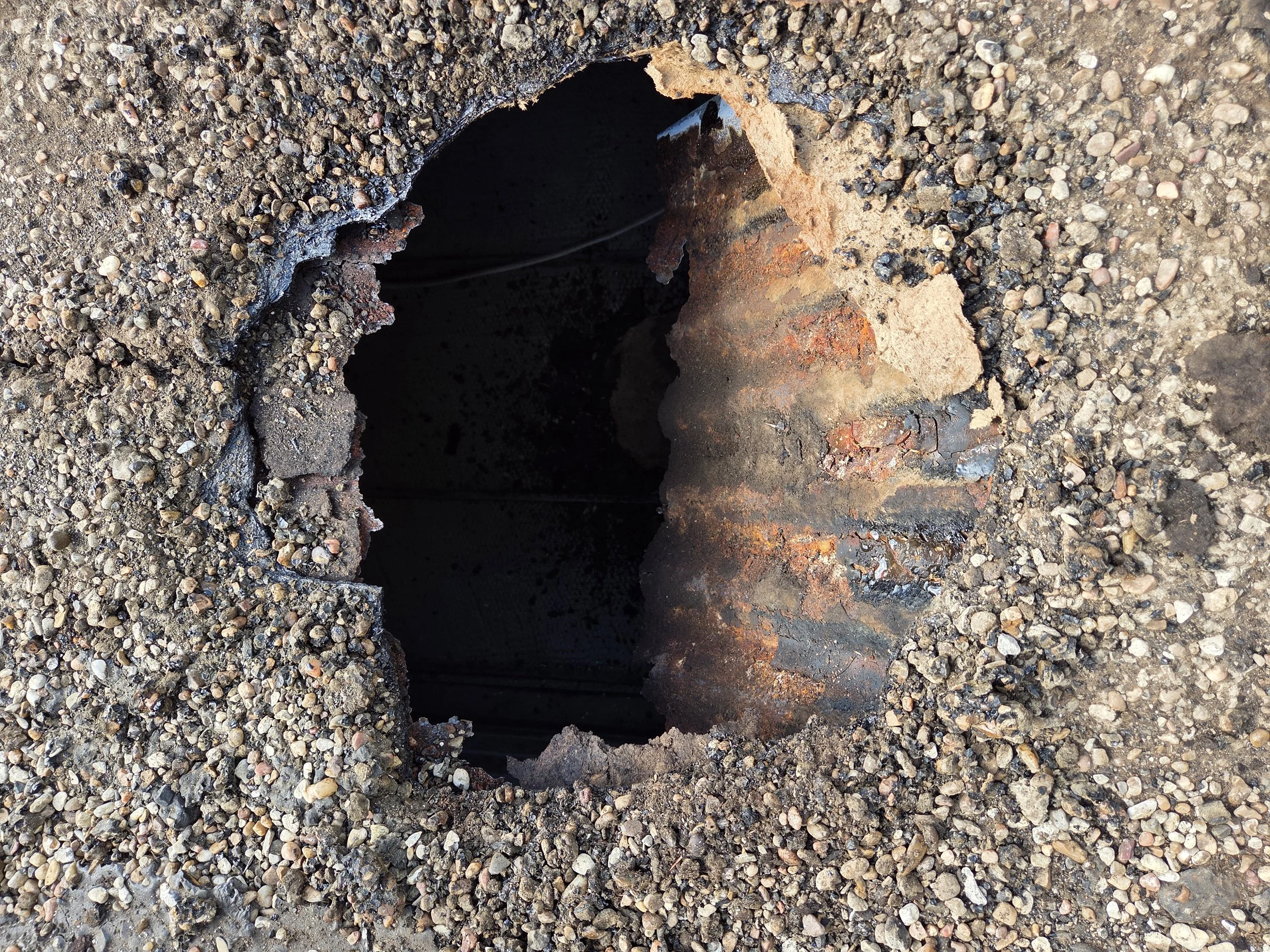
A tear-off reveals what years of trapped moisture can do
Most building owners never think about their roof until water shows up on the ceiling. By then, the damage has usually been building for years — quietly, invisibly, inside the roof system itself. We got a stark reminder of that recently on a job in our area, when a routine tear-off turned into something none of us expected.
Three Roofs. One Deck. Zero Chance.
When our crew started pulling back the top layer, they found what's become an all-too-common situation on older commercial buildings: three complete roof systems stacked on top of each other. A PVC membrane on top, a modified bitumen layer beneath that, and an original built-up roof at the bottom. Each one had been installed over the last without removing the failed system below it.
That's three generations of roofing — and three generations of trapped moisture with nowhere to go.
By the time we got down to the steel deck, the damage was severe. Sections had corroded completely through. We're not talking surface rust — there were voids straight through to the building interior. What should have been load-bearing structural steel had rotted out entirely.
A Note on Layered Systems
To be fair, re-roofing over an existing system isn't inherently wrong. When done correctly — with a proper assessment of the existing assembly's condition, moisture content, and structural capacity — it can be a cost-effective and perfectly sound approach. Many buildings carry a recover system that performs well for decades.
The problem is when that analysis doesn't happen. When a new layer goes down over a wet, failing system without anyone stopping to ask what's actually underneath, you're not extending the roof's life — you're sealing in the damage and handing the bill to whoever owns the building next. That's what happened here, and the deck paid the price.
The Real Cost of Waiting
This is where most building owners underestimate their exposure, because a deteriorating roof doesn't just cost you a roof replacement — it costs you on multiple fronts simultaneously.
The interior damage comes first and accumulates quietly. Water infiltrating through a compromised membrane doesn't announce itself with a waterfall. It wicks through insulation, travels along structural members, and eventually shows up as a ceiling stain, a warped tile, or a soaked section of drywall — often far from where it actually entered. By the time it's visible, it's typically been moving through the building for months. Insulation, drywall, metal framing, wood blocking, electrical components, inventory stored on shelving — all of it is vulnerable, and none of it is cheap to replace. Add mold remediation if the moisture has been present long enough, and the interior scope can dwarf the roofing cost entirely.
Structural damage is the next tier, and it's the one that turns a manageable project into a serious problem. What we found on this tear-off — corroded deck with sections rotted through — isn't a roofing repair anymore. It's a structural repair that requires engineering review, custom-cut deck panels, coordination with the GC or building owner on interior access, and scheduling complexity that a straightforward roof replacement never would have involved. Structural deck damage can also trigger code compliance reviews on older buildings, opening additional scope nobody budgeted for.
Then there's the operational cost that rarely makes it into anyone's damage estimate. A leaking roof over a warehouse, manufacturing floor, retail space, or office doesn't just damage the building — it disrupts the business inside it. Equipment gets moved or shut down. Inventory gets repositioned or written off. Employees work around buckets and tarps. Customers notice. In some industries, a single moisture event near sensitive equipment or product can trigger losses that exceed the entire cost of a new roof. These aren't hypothetical scenarios — we hear about them regularly from owners who wish they'd made the call sooner.
And underneath all of it, the whole time the building is leaking and the business is absorbing disruption, the saturated insulation is quietly hemorrhaging energy. A roof system holding significant moisture can lose the majority of its thermal performance. That loss shows up every month in utility costs that nobody connects back to the roof.
The compounding nature of all this is the real danger. Each category of damage feeds the next, and the longer it runs, the harder it is to separate what the roof cost from what the delay cost.
Getting Ahead of It
The owners who avoid situations like this aren't lucky — they're paying attention, and they're planning.
Twice-yearly inspections by a qualified roofing contractor, plus an internal walk after major storms, catch the small things before they become structural ones. Flashing separations, open seams, debris-clogged drains — these are inexpensive to address when they're found early and very expensive when they're not.
Beyond inspections, the most important thing a building owner can do is stay aware of how their roof is aging. Know when it was installed, know what system it is, and understand that every roof has a finite service life. When you start approaching that window, the conversation about replacement shouldn't be a surprise — it should already be underway.
That means building capital budget line items for roof replacement years before the roof actually fails. A roof that's 18 years old and showing early signs of fatigue isn't an emergency yet, but it will be if it's ignored for another five years. Owners who plan the capital expenditure in advance have options — they can choose the right system, schedule on their timeline, and avoid the premium that comes with emergency scope. Owners who wait until failure don't have that luxury.
The deck in that photo didn't rot overnight. It got there one deferred inspection, one missed maintenance cycle, and one delayed capital conversation at a time.
